प्रणम्य शिरसा देवं गौरीपुत्रं विनायकम्।
भक्तावासं स्मरेन्नित्यमायुःकामार्थसिद्धये॥१॥
Sankat Nashan Ganesh Stotra with Meaning
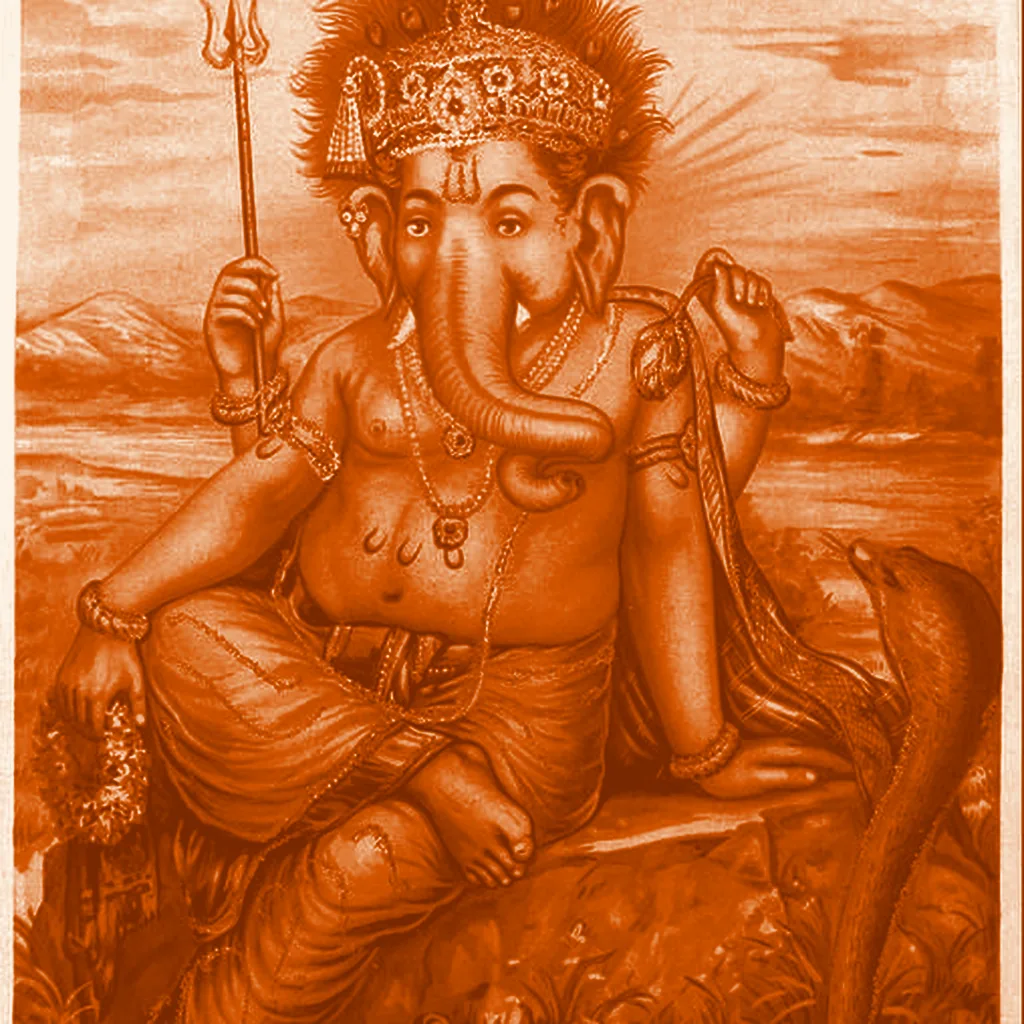
The Sankat Nashan Ganesh Stotra, also called the Ganesh Dwadash Naam Stotra, is the short hymn from the Narada Purana that names Ganesha twelve times, from Vakratunda to Gajanana, and promises that whoever recites the twelve names morning, noon and evening has no fear of obstacles. Sankat nashan means the destroyer of trouble, and that is what it is recited for: before a journey, an examination, a new venture, or when a difficulty will not move.
This page gives the complete stotra, all eight verses in Sanskrit with a plain meaning in English, then the twelve names one by one, where the hymn comes from, and how it is recited. The same twelve names are the answers of the Ganesh Prashnavali on this site.
The Eight Verses with Meaning
Verse 1
Bowing the head to the Lord Vinayaka, son of Gauri, in whom devotees dwell, one should remember him every day for long life, for the fulfilment of desire and for prosperity.
Verse 2
प्रथमं वक्रतुण्डं च एकदन्तं द्वितीयकम्।
तृतीयं कृष्णपिङ्गाक्षं गजवक्त्रं चतुर्थकम्॥२॥
तृतीयं कृष्णपिङ्गाक्षं गजवक्त्रं चतुर्थकम्॥२॥
First Vakratunda, the curved trunk; second Ekadanta, the single tusk; third Krishnapingaksha, the dark tawny-eyed; fourth Gajavaktra, the elephant-faced.
Verse 3
लम्बोदरं पञ्चमं च षष्ठं विकटमेव च।
सप्तमं विघ्नराजेन्द्रं धूम्रवर्णं तथाष्टमम्॥३॥
सप्तमं विघ्नराजेन्द्रं धूम्रवर्णं तथाष्टमम्॥३॥
Fifth Lambodara, the great-bellied; sixth Vikata, the formidable; seventh Vighnaraja, king of obstacles; and eighth Dhumravarna, the smoke-coloured.
Verse 4
नवमं भालचन्द्रं च दशमं तु विनायकम्।
एकादशं गणपतिं द्वादशं तु गजाननम्॥४॥
एकादशं गणपतिं द्वादशं तु गजाननम्॥४॥
Ninth Bhalachandra, the moon on the brow; tenth Vinayaka, the supreme leader; eleventh Ganapati, lord of the ganas; twelfth Gajanana, the elephant-faced one.
Verse 5
द्वादशैतानि नामानि त्रिसन्ध्यं यः पठेन्नरः।
न च विघ्नभयं तस्य सर्वसिद्धिकरं प्रभो॥५॥
न च विघ्नभयं तस्य सर्वसिद्धिकरं प्रभो॥५॥
The person who recites these twelve names at the three sandhyas of the day has no fear of obstacles; O Lord, this brings every accomplishment.
Verse 6
विद्यार्थी लभते विद्यां धनार्थी लभते धनम्।
पुत्रार्थी लभते पुत्रान्मोक्षार्थी लभते गतिम्॥६॥
पुत्रार्थी लभते पुत्रान्मोक्षार्थी लभते गतिम्॥६॥
The seeker of learning gains learning, the seeker of wealth gains wealth, the one who wants children gains children, and the seeker of liberation gains the way.
Verse 7
जपेद्गणपतिस्तोत्रं षड्भिर्मासैः फलं लभेत्।
संवत्सरेण सिद्धिं च लभते नात्र संशयः॥७॥
संवत्सरेण सिद्धिं च लभते नात्र संशयः॥७॥
One who recites this hymn to Ganapati obtains its fruit in six months and accomplishment in a year; of this there is no doubt.
Verse 8
अष्टभ्यो ब्राह्मणेभ्यश्च लिखित्वा यः समर्पयेत्।
तस्य विद्या भवेत्सर्वा गणेशस्य प्रसादतः॥८॥
तस्य विद्या भवेत्सर्वा गणेशस्य प्रसादतः॥८॥
One who writes it out and offers it to eight brahmins gains all learning by the grace of Ganesha. So ends the Sankat Nashan Ganesh Stotra of the Narada Purana.
The Twelve Names, One by One
Vakratunda, the curved trunk that bends the crooked straight. Ekadanta, the single tusk, broken to write the Mahabharata. Krishnapingaksha, the dark, tawny eyes that see through appearances. Gajavaktra, the elephant face, patient strength and long memory. Lambodara, the great belly that holds the universe and digests everything. Vikata, the formidable one, the face shown when the way is hard.
Vighnaraja, the king of obstacles, who places them and removes them. Dhumravarna, the smoke-coloured one, seen as if through haze. Bhalachandra, the moon on the brow, coolness of mind. Vinayaka, the supreme leader with no master above. Ganapati, lord of the ganas, work done together. Gajanana, the elephant-faced one, with whom the round is complete. Each name is a way of seeing one Lord, and in the prashnavali each becomes a reading.
Where the Stotra Comes From
The hymn is from the Narada Purana and is printed in most collections of daily prayers in North India, usually right after the invocation of Ganesha that opens any worship. It is popular because it is short, needs no special preparation, and because its closing verses state its fruit plainly: the student gains learning, the seeker of wealth gains wealth, the one who wants children gains children, the seeker of liberation gains the way.
The seventh verse says that reciting it for six months brings result and for a year brings accomplishment, and the eighth that writing it out and offering it to eight brahmins brings all learning by Ganesha's grace. These are the stotra's own words, given here as the text gives them.
When and How It Is Recited
The text itself asks for recitation at the three sandhyas, morning, noon and evening. In practice most devotees recite it once in the morning, and on Wednesdays, on Sankashti Chaturthi each month, and through the days of Ganesh Chaturthi. It is also recited before beginning anything new, which is the oldest reason to call on Ganesha at all.
Sit facing an image of Ganesha, offer a flower or durva grass if you have it, and recite the eight verses slowly. The names are the heart of it; if the Sanskrit is unfamiliar, recite the twelve names alone with the meaning in mind.
Frequently Asked Questions
What is the Sankat Nashan Ganesh Stotra?
A hymn of eight verses to Ganesha from the Narada Purana that lists his twelve names and promises freedom from obstacles to those who recite them. It is also called the Ganesh Dwadash Naam Stotra.
What are the twelve names of Ganesha in the stotra?
Vakratunda, Ekadanta, Krishnapingaksha, Gajavaktra, Lambodara, Vikata, Vighnaraja, Dhumravarna, Bhalachandra, Vinayaka, Ganapati and Gajanana, in that order.
How many times should it be recited?
The text asks for the twelve names at the three sandhyas of the day and says that six months of recitation brings result and a year brings accomplishment. Most devotees recite it once each morning.
Which Purana is it from?
The Narada Purana, as the stotra's own closing line states.
Can it be recited on any day?
Yes. Wednesdays, Sankashti Chaturthi and Ganesh Chaturthi are the customary occasions, and before any new beginning on any day.
If you have come to the stotra with a question about something you are about to begin, the Ganesh Prashnavali on this site lets you choose a number and read one of these twelve names as your answer, with its meaning and a reading of whether the matter is favourable.
The verses are traditional texts; the explanations are the site's own words, offered for reflection, not as a guarantee of any outcome. Privacy Policy.
Image: Shri Mangalmurti, Ravi Varma Press lithograph (public domain), recoloured in the site's palette.