श्री खाटू श्याम प्रश्नावलीKhatu Shyam Prashnavali from the eleven names of Shyam Baba
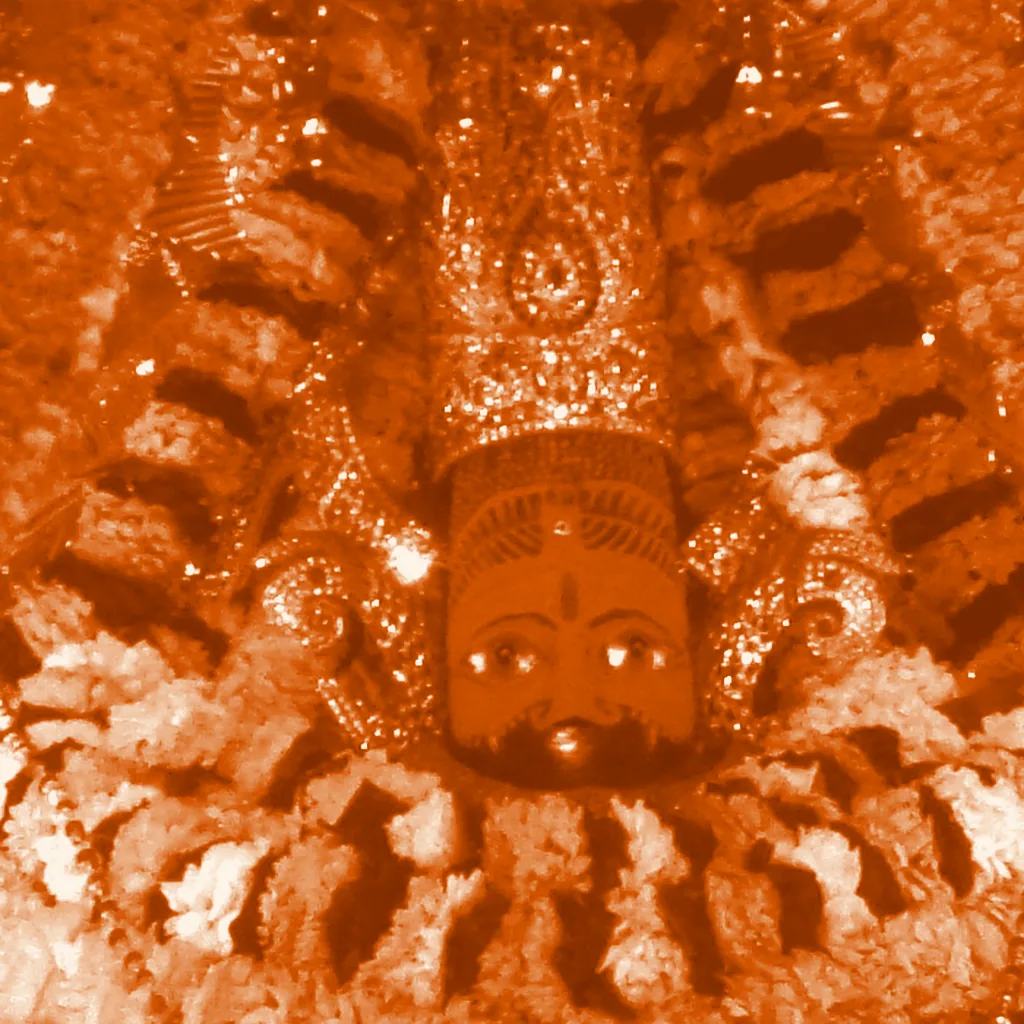
- Remember Shyam Baba, the refuge of the defeated, and pray with a sincere heart
- Hold one clear question in your mind
- Touch the number in the chart below that you feel drawn to
- Read the name, its story and your answer below
| 01 | 02 | 03 | 04 | 05 | 06 | 07 | 08 | 09 | 10 | 11 |
| 12 | 13 | 14 | 15 | 16 | 17 | 18 | 19 | 20 | 21 | 22 |
| 23 | 24 | 25 | 26 | 27 | 28 | 29 | 30 | 31 | 32 | 33 |
| 34 | 35 | 36 | 37 | 38 | 39 | 40 | 41 | 42 | 43 | 44 |
What Is the Khatu Shyam Prashnavali?
Khatu Shyam Ji is Barbarik, grandson of Bhima, who gave his head to Shri Krishna before the war of the Mahabharata and received the boon that in the age of Kali he would be worshipped by Krishna's own name, Shyam, and that whoever came to him defeated would not go back empty-handed. His head is enshrined at Khatu in Sikar district of Rajasthan, where the temple is believed to date from 1027, and devotees know him by many names: Haare ka Sahara, Sheesh ke Daani, Lakhdatar, Teen Baan Dhaari, Khatu Naresh.
This prashnavali is built on eleven of those names. The chart has 44 numbers, and the number you choose leads to one of the eleven names, each appearing four times, so every answer has an equal chance. Each name is shown with the story behind it and a reading of whether your matter is favourable. Devotees ask here especially on the Ekadashi of each month and in the Phalgun mela.
It is also searched for as the Shyam Baba Prashnavali, Baba Shyam Prashnavali or Khatu Wale Shyam Prashnavali; it is the same chart. With every name explained, the page also serves as the eleven names of Khatu Shyam Ji with their meaning.
The Eleven Names and Their Answers
- बर्बरीक
Barbarik
Barbarik, his birth name. Son of Ghatotkacha and Maurvi, grandson of Bhima, he had vowed to fight only on the side that was losing. That vow is why Krishna asked for his head: with him in the field, no side could lose.
He stands with the weaker side. If your cause is honest, it does not matter that it looks weak today. Yes. (Yes) - शीश के दानी
Sheesh ke Daani
The giver of his head. Before the war Krishna came to him as a brahmin and asked for a gift; Barbarik asked what, and when the answer was his head, he gave it without hesitation, asking only to watch the war to its end.
The gift asked of you is large. Give it only with a whole heart, and after you have thought it through as he did. Wait until you can. (Wait) - हारे का सहारा
Haare ka Sahara
The refuge of the defeated. This was Krishna's boon: in the age of Kali, whoever comes to Shyam after losing everything will find support, and no one will go back from his door empty-handed.
You have come after a loss, and this name exists for exactly that. The tide turns from here. Yes. (Yes) - तीन बाण धारी
Teen Baan Dhaari
The bearer of three arrows. His three infallible arrows could mark every leaf of a tree, and even the one hidden under Krishna's foot. With them he could have ended the whole war in moments, which is why he could not be allowed to fight.
Great power, meant to be used sparingly. Do not spend everything you have at once, and do not use strength where patience would do. Not now. (Not now) - लखदातार
Lakhdatar
The giver of lakhs, the open-handed one. Devotees say that what he gives he gives in abundance, and that he asks nothing but faith in return.
Generosity opens the door here. Yes, and give something on the way, to someone who needs it. (Yes) - खाटू नरेश
Khatu Naresh
The king of Khatu. His head appeared at Khatu, at a spot where a cow would come and let down her milk; the ruler of the place was told in a dream to build a temple there, and the first temple is believed to date from 1027.
The place you are in is the right one. Do not look elsewhere for what is already here. Yes; stay and build. (Yes) - मोर्वी नंदन
Morvi Nandan
Son of Maurvi. It was his mother, Maurvi, also called Kamkatankata, who taught him the art of war and who made him promise to stand with the losing side.
Learn first, as he learnt from his mother. The matter is for later, after you have been taught what it needs. Wait. (Wait) - लीले का असवार
Leele ka Asvaar
The rider of the blue horse. Shyam Baba rides Leela, the blue horse, and the flag that flies on the temple's spire, brought each year from Surajgarh, carries the blue horse on white cloth.
Movement favours this matter. A journey, a change of place or a fresh start is the right move. Yes. (Yes) - मोरछड़ी वाला
Morchhadi Wala
The one with the peacock-feather whisk. The peacock feather is Krishna's own mark, and Shyam Baba carries it as the sign that he is Krishna's by name and by grace.
Krishna's mark means the result rests in Krishna's hands, not yours. You have done your part; wait and keep faith. (Wait) - कलियुग का अवतार
Kaliyug ka Avtaar
The deity of this age. Krishna's boon placed him in the age of Kali, for the people of this time. His birthday is kept on Devuthani Ekadashi, and the great fair at Khatu falls on the Ekadashi of Phalgun.
For this age and this time: act in the present, not in some imagined future. Yes, now. (Yes) - श्याम
Shyam
Shyam, Krishna's own name, given to him. After the gift of his head, Barbarik watched the whole war from a hilltop without taking part in it, and when the victors argued over who had won, it was he who told them that only Krishna's chakra had fought.
There are matters in which your part is to watch and not to act, as his was. This is one of them. Not now; see it through to the end before you judge it. (Not now)
Rules of the Prashnavali
- Ask one question at a time.
- Do not ask the same question repeatedly.
- No more than three questions in a day.
- Read the answer with faith and reflect on it. For important decisions, also use your own judgment.
Frequently Asked Questions
Is the Khatu Shyam Prashnavali free?
Yes. It is free, with no sign-up and no login.
Where do the eleven names come from?
They are the names by which devotees address Shyam Baba, each tied to a part of the story of Barbarik: the gift of his head, the three arrows, the blue horse, the boon of Shri Krishna.
Is this the Shyam Baba prashnavali?
Yes. Khatu Shyam Ji, Shyam Baba, Baba Shyam and Haare ka Sahara are names of the same deity, and this is the one prashnavali for all of them.
Does it give a yes or no answer?
Each answer ends with Yes, Wait or Not now, along with the name and its story.
Can I ask the same question again?
By tradition, not on the same day. Ask once, with faith, and reflect on the answer.
Are the answers true?
A prashnavali is a devotional practice. Devotees read the answers with faith and find guidance in them. It is not a guarantee of any outcome.
More prashnavalis on this site
- Ram Shalaka Prashnavali: 225 letters from Shri Ramcharitmanas leading to nine chaupais
- Hanuman Prashnavali: a chakra of 49 numbers with a yes or no answer
- Sai Baba Prashnavali: 720 numbered answers
- Shiv Prashnavali: the eight verses of the Rudrashtakam and its closing verse
- Ganesh Prashnavali: the twelve names of Ganesha
- Durga Prashnavali: the nine forms of Navadurga
A prashnavali is a devotional practice. For important decisions use your own judgment and take qualified advice. Privacy Policy.
Image: Shyam Baba at the Reengus temple, photograph by Wikimedia Commons user Shyam, CC BY-SA 3.0, cropped and recoloured in the site's palette; this image is shared under the same licence.